Commercial New Construction Build
Commercial Roofing New Construction
Green Valley Roofing & Construction specializes in commercial roof repair, commercial roof replacement, new construction roofing, siding, and gutter installation services. Our experience ranges from residential homes to large-scale commercial and multi-family developments.
Learn more about our company and services at https://greenvalleyroofers.com.
See our commercial roofing case study for a new construction project below.
Project Overview
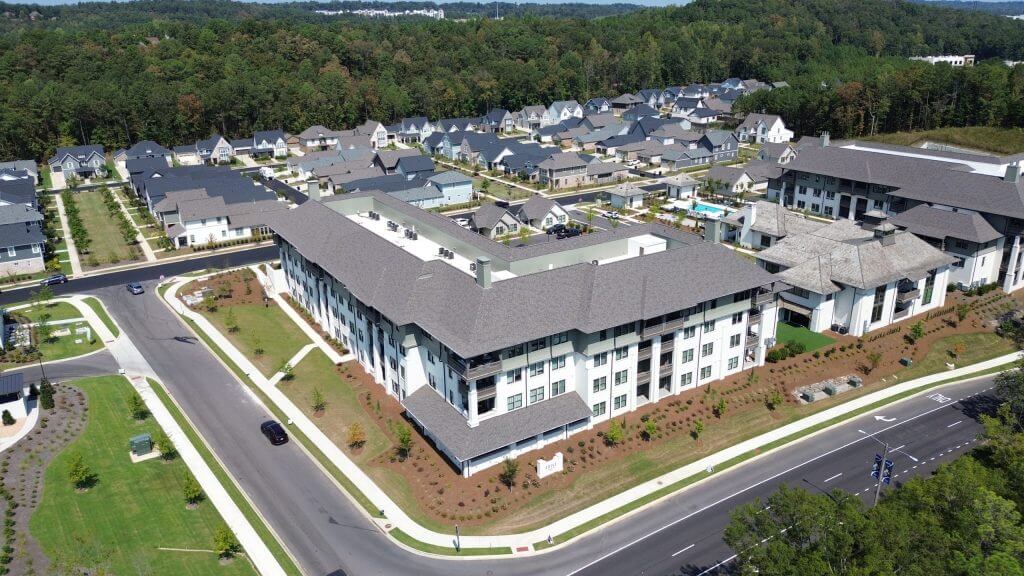
Green Valley Roofing & Construction was invited to bid on a new construction roofing project for Signature Homes at Knox Square. The project required a complete roofing system installation based on architectural blueprints and coordination with the general contractor and multiple on-site trades.
In this case study, we outline our bidding process, project coordination, value engineering, and installation approach—demonstrating how strong communication and planning are critical on commercial and new construction projects.
Industry best practices for construction sequencing and coordination are outlined by Construction Business Owners.
Project Background
Location: Knox Square
Project Type: New Construction
Building Type: Commercial / Multi-Unit Residential
Roof Size: Approximately 888 squares
Roofing System: CertainTeed Landmark Architectural Shingles
Client: Signature Homes
Project Coordination: Frank Brown, Commercial Roofing Advisor
Signature Homes issued a bid request during the planning phase of construction. Green Valley Roofing reviewed the full set of architectural blueprints, scoped the roofing system, and provided a detailed pricing proposal. After evaluation, Green Valley Roofing was awarded the bid.
The Roofing Challenge
As with many new construction projects, coordination and timing were key challenges throughout the build:
The general contractor completed roof decking prior to roofing installation.
Roofing installation had to align with the schedules of other trades.
Change orders were required to accommodate CertainTeed Landmark architectural shingles.
Architectural specifications needed adjustments to align with real-world site conditions and budget considerations.
While the roofing installation itself was completed within two weeks, the project required ongoing coordination over the following two months due to trade sequencing and construction changes.
Additional insight on managing construction change orders can be found here.
Our Roofing Strategy & Approach
Green Valley Roofing & Construction focused on communication, flexibility, and value engineering to ensure the project stayed on track.
Our approach included:
Reviewing architectural plans and roofing specifications in detail.
Coordinating installation timing with the general contractor after decking was completed.
Delivering all roofing materials and labor in accordance with the contract.
Installing the roofing system per CertainTeed and contract requirements.
Managing change orders efficiently as material and specification adjustments were required.
Working alongside the general contractor and other trades to prevent delays or conflicts.
In addition, our team collaborated with the general contractor to review and modify architectural specifications, offering value engineering solutions that helped reduce costs for the owner without compromising performance or appearance.
More on value engineering in commercial construction can be found here.
Value Engineering & Coordination
Through collaboration with the general contractor, Green Valley Roofing provided alternative solutions that:
Maintained CertainTeed product standards.
Met performance and warranty requirements.
Reduced overall project costs for the owner.
Improved constructability and installation efficiency.
This value-driven approach helped Signature Homes move forward confidently while keeping the project within budget.
Project Results
Bid successfully awarded through competitive pricing and detailed planning.
Roofing system installed per contract specifications and manufacturer standards.
Materials and labor delivered on schedule.
Change orders managed smoothly with minimal impact on project timeline.
Strong coordination with GC and trades, ensuring project continuity.
Cost savings achieved through value engineering adjustments.
Why Commercial Coordination Matters
Commercial and new construction roofing projects require more than installation alone. Success depends on:
Clear communication with general contractors.
Flexibility to adjust to evolving site conditions.
Understanding architectural intent and construction sequencing.
The ability to provide value engineering when needed.
Green Valley Roofing & Construction brings experience, structure, and reliability to commercial projects, ensuring roofs are installed correctly, efficiently, and with long-term performance in mind.
Commercial Roofing Services We Provide
- New construction roofing
- Commercial roof replacement
- Architectural shingle systems
- Manufacturer-approved installations
- Value engineering & spec review
- Coordination with general contractors & trades
- Commercial Roof Repairs
- Specialty shingle systems
- Metal Roofing systems
Commercial Roof Leak FAQs
Q: What should I do immediately if my commercial roof is leaking?
A: First, protect people, equipment, and inventory by moving items away from the leak and placing containers to catch water. If the leak is near electrical equipment, shut off power to the affected area if it’s safe to do so. Then contact a commercial roofing contractor as soon as possible to inspect and stop the leak.
Q: Is a leaking commercial roof an emergency?
A: Yes. Even small leaks can spread quickly in commercial buildings, damaging insulation, decking, ceilings, inventory, and equipment. A leak should be addressed immediately to prevent costly interior damage and business disruption.
Q: Should I shut down operations if my commercial roof is leaking?
A: Not always, but it depends on the severity and location of the leak. If water is affecting electrical systems, safety areas, or tenant spaces, temporary shutdowns or relocations may be necessary until the leak is controlled.
Q: Can I temporarily stop a commercial roof leak myself?
A: Temporary measures like buckets or interior protection can help minimize damage, but climbing onto the roof is not recommended. Commercial roofs often have hidden hazards, and improper temporary fixes can worsen the problem. A professional roofer can safely install temporary seals or tarps if needed.
Q: What usually causes commercial roof leaks?
A: Most commercial roof leaks originate from penetration points and details—not the middle of the roof. Common causes include HVAC units and curbs, pipe penetrations and pitch pans, open seams or flashing, ponding water near drains, and aging sealants or fastener back-outs.
Q: How do I know where the leak is coming from?
A: Water often travels before it appears inside the building. The visible drip may not align directly with the roof entry point. Professional inspections trace leaks from the interior to the roof surface to identify the true source.
Q: Can a commercial roof leak be repaired without replacing the roof?
A: In many cases, yes. If the roof system is still structurally sound, targeted repairs and sealing can stop leaks and extend the roof’s lifespan. Replacement is typically only necessary when the system is beyond repair.
Q: How fast can a commercial roof leak be repaired?
A: Emergency leak repairs are often addressed the same day or within 24 hours, depending on weather and access. Permanent repairs may be scheduled once conditions allow for safe installation.
Q: What happens if I ignore a commercial roof leak?
A: Ignoring a leak can lead to mold growth, structural deck damage, insulation saturation, higher energy costs, tenant complaints, code or safety issues, and much higher repair or replacement costs later.
Q: Is a commercial roof leak covered by insurance?
A: Coverage depends on the cause. Sudden storm-related damage may be covered, while leaks caused by normal wear and lack of maintenance often are not. A roofing contractor can document the damage to support an insurance claim if applicable.
Q: What information should I gather before calling a roofer?
A: Helpful details include when the leak started, weather conditions at the time, location of interior damage, any past roof repairs, and roof type and approximate age. Even if you don’t have all this information, a roofer can still inspect and diagnose the issue.
Q: Can commercial roof leaks happen even without a storm?
A: Yes. Many leaks occur during light rain or cold weather due to thermal movement, aging materials, or failed sealants. Storms often expose existing weaknesses rather than create new ones.
Q: How can I prevent future commercial roof leaks?
A: The best prevention includes annual professional roof inspections, inspections after major weather events, keeping drains and scuppers clear, routine maintenance of penetrations and sealants, and addressing small issues early.
Q: How often should commercial roofs be inspected?
A: At least once per year and after major storms. Buildings with heavy rooftop equipment or older roofs may benefit from more frequent inspections.
Q: Who should I call when my commercial roof is leaking?
A: Call a licensed commercial roofing contractor with experience coordinating with property managers, general contractors, and building owners. Fast response and proper diagnosis are critical.
At Green Valley Roofing & Construction, we proudly partner with builders, developers, and general contractors across Central Alabama. Whether you’re planning a new construction project or need a reliable commercial roofing partner, our experienced team is here to support your project from bid to completion.
Call (205) 791-5800 or visit our contact page!